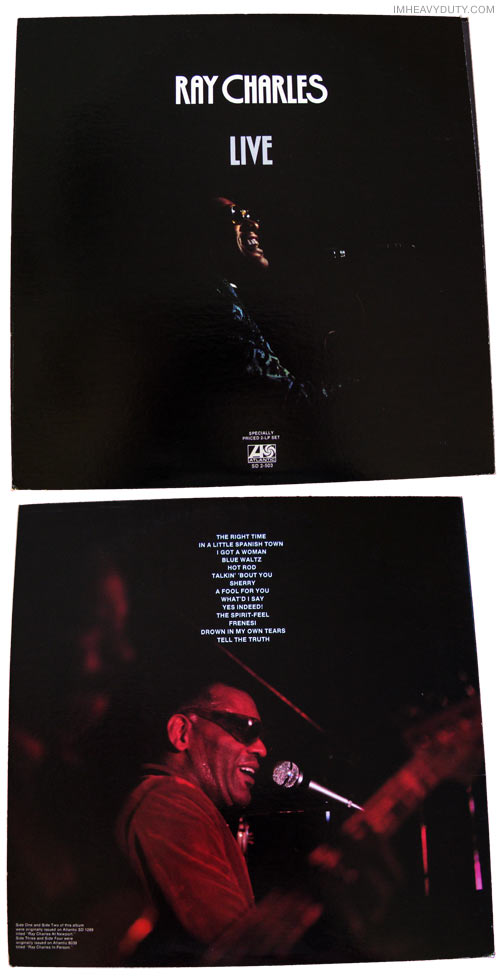
This is another record I inherited from my friend Bob Bob(ala). I’ve posted so many of his old records already that I think he needs his own tag. I confess that when I first looked at Ray Charles Live (1973, recorded in ’58 and ’59) I thought it was a decent addition to the collection, but didn’t expect it to rock my world. I was wrong. I’ve played this entire double album many times since I got it a few years back.
Ray Charles can tear the roof off any place and in a variety of styles. There is everything here from some swinging hard bop jazz instrumentals to classic blues soul numbers like “The Right Time.” In fact, there are two recordings of that song on here and it’s still not enough for me. When the Raylette Marjorie Hendricks starts screaming “BAAAY-BAAAYeee” repeatedly I get the goosebumps. The excellent notes inside the gatefold cover describe her singing as “powerful soulfulness-bordering-on-hysteria.” It doesn’t get any better than that for me.
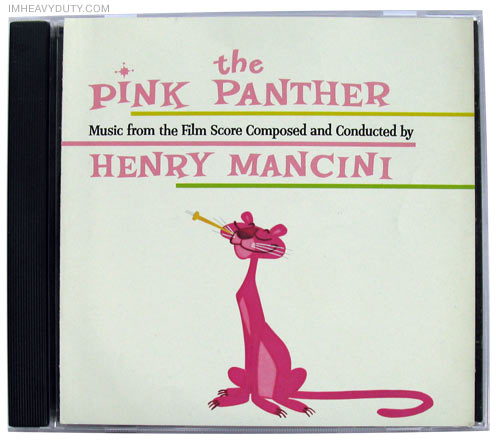
There’s just something about the early 1960s high society aesthetic, at least how it’s portrayed in movies of the time, that speaks to me. Modern, hip, glamorous and sleek, it’s a big part of the fun of watching The Pink Panther, early James Bond flicks, and other films from this time. A few years later, things started getting weird, heavy and psychedelic in movies and music. Not that there isn’t plenty of great art from the late ’60s. The cars, clothes, interiors, the jokes, the actors, and of course the music, all make this one of my favorite movies.
The Pink Panther was released in 1963. I got this soundtrack only a few years ago. I’ve always loved Henry Mancini’s score and “The Pink Panther Theme” has to be one of the swingingest jams ever. You probably have heard so much that you don’t even pay attention to it now. But you should. It’s a tiny music masterpiece, full of perfect punctuations as it steadily builds the layers of orchestration, and then sneaks off into the distance, but ends with one last exclamation point. Tears the roof off in less than three minutes!
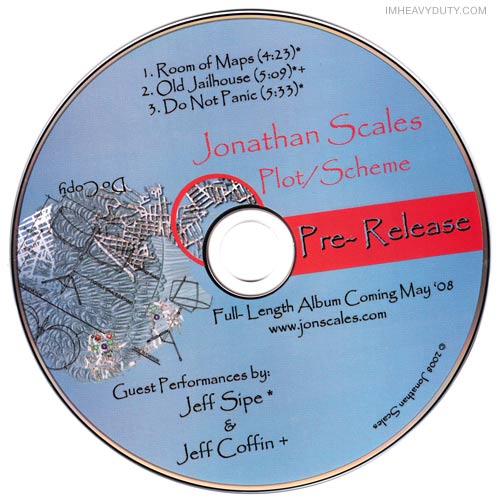
Steel drums? Jazz? Sounds like Jonathan Scales has put together the music chocolate and peanut butter to come up with some ear candy that’s delicious and nutritious. Maybe there are other folks doing the same thing but how’s a virtual hermit like me to know? Sounds fresh either way, and I dig it. I got my copy from Andy, but you can check out the same songs at Mr. Scales MySpace page. Straight outta Asheville y’all!
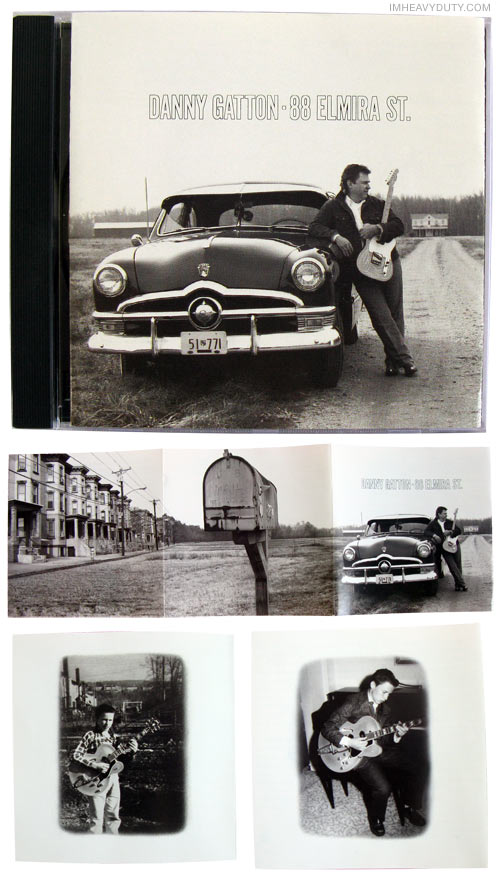
Like that tricky panoramic photograph? I can’t find a credit for the album art in the liner notes. Danny Gatton grew up in Southeast D.C. and this album title was his address. Anyone who is a serious student of guitar probably knows of Mr. Gatton, but I don’t think his audience ever got much broader than that. 88 Elmira St. came out in 1991 and it was his major label debut. The record has a little of everything that can be considered American roots music, including jazz, blues, rockabilly and funk. I have played this album at least 100 times and I’m still stunned by the imagination, soul and ferocious speed of his playing.
Danny Gatton committed suicide in 1994. It’s hard to believe it’s been that long. His fans included Les Paul and Steve Vai. He was the guitarist’s guitarist.
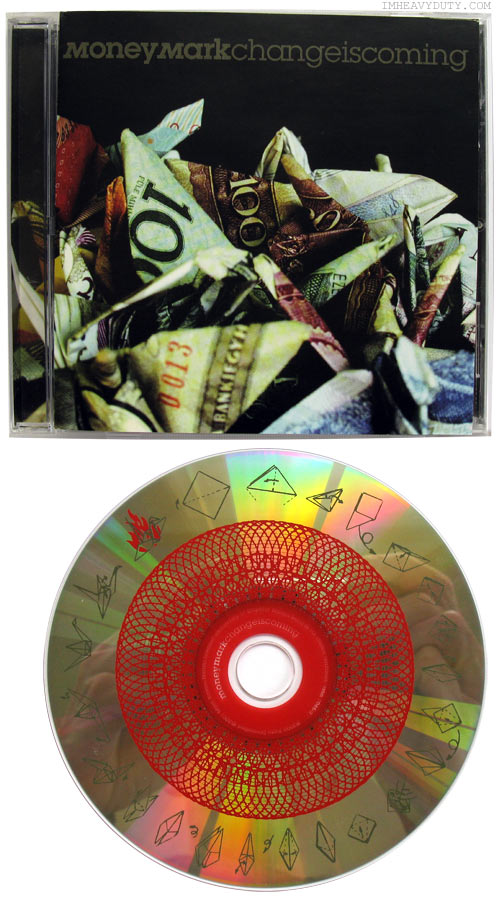
All right, I’m going to have to pull back to a low rating of 9 on this one. Change is Coming by Money Mark is still awesome, just not quite so much as the earlier records. Still, I’ve probably played in its entirety at least 100 times. Overall it’s more instrumental and jazzy than his masterpiece, Push the Button. The packaging is almost as interesting as the music. I didn’t include all the artwork, but it revolves around origami swans made from different paper currencies and then set on fire. Check out the folding, and burning, directions printed on the disk itself.
The sad thing about Change is Coming is it’s the last Money Mark record I got. There have been two more full length releases and it’s ridiculous that I don’t have them, yet. Somebody help me out!
As an added bonus today, I’ve included a video with Mr. Mark from an interview that was on the Sundance Channel where he explains his relationship with the Beastie Boys and his creative process.
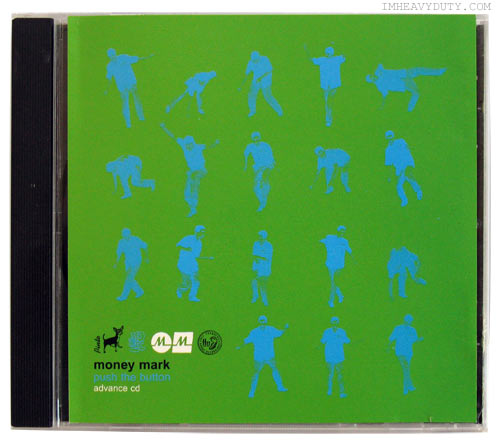
Genius! Genius I tell you! More Money Mark greatness today. This record is deep! Somehow this disk is even better than the first. I don’t know where or how I got this advance copy of Push the Button but it’s good to have friends that know what’s going on. This record has a lot more vocals and that’s just more to love. Mark’s lyrics are brilliant and at times poignant. His voice is perfect for his unique style of music. Noise, techno, electronic, gospel, soul, funk, rock and jazz are all in the mix.
I have played Push the Button for countless people over the years and I have never met anyone who didn’t love it. And if there are people out there who don’t dig it I doubt I want to meet them.
Push the button
Push the button
Open the door and let me come innnnnn…
Money Mark is the greatest. He’s played with everyone from Beck to the Beastie Boys, but the truth is, even though I love those artists, I play his music much more often. Mark’s Keyboard Repair has 30 tracks. You’re probably thinking “that’s too much” but I assure after one listen you’ll start thinking “I want more.” Some folks describe this recording as demo quality, but I disagree. It’s free and loose but the sound is perfect. Many of the songs are only about a minute long. In some ways it feels less like a typical album and more like the cue track to your favorite unmade movie. Give it a spin and pretend you’re the star.
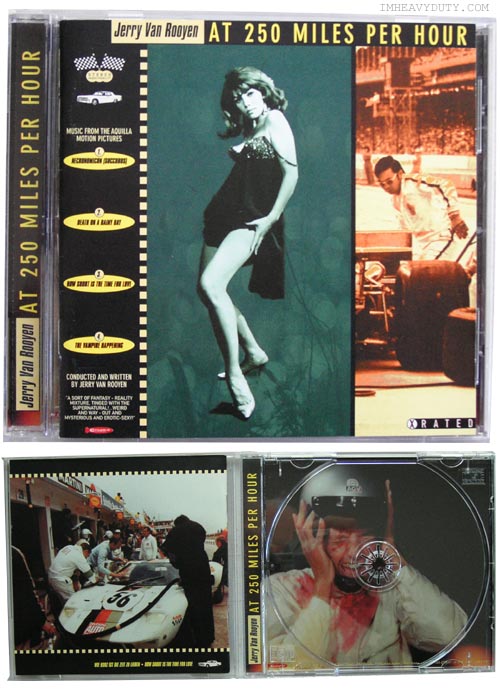
At 250 Miles Per Hour was put out by a German label with a seriously painful name, Crippled Dick Hot Wax. Jerry Van Rooyen had a habit of writing original scores for strange late ’60s movies that were either horror or soft porn, and sometimes both. Maybe even weirder than that is the fact that this sub-sub-genre of swinging music has a solid cult following.
How did I hear about it? No, mom, I wasn’t watching “The Castle of Bloody Lust” when Mr. Van Rooyen’s grooving jazz caught my attention. It was a comedy from 1998 that featured William Shatner called Free Enterprise. The producers, wisely, chose to re-use Rooyen’s kicking number “The Great Train Robbery” to open the movie. I recommend the movie and the tunes. I play this CD all the time, all the time.
My favorite song is the exquisitely short “Fabienne Is Going Wild.” It’s barely over one minute and it’s the best strip music I’ve ever heard. If it were any longer people’s clothes would start flying. Check out the clips.
Acquired: 2005 – Bob Bobala Jazz Heritage Endowment
Keeper: Yes
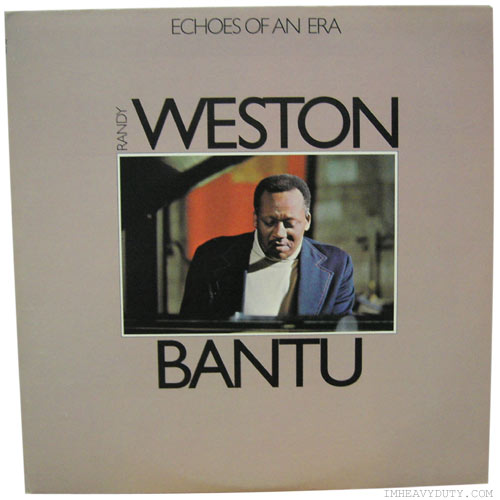
Bob Bob’s left-behind record collection is the gift that keeps on giving. Tonight’s album is a double from Randy Weston. Bantu comes in a nice gatefold cover complete with a lengthy article about these reissues and more significantly, the original program notes and lyrics by the late great poet Langston Hughes. Hughes collaborated on the first LP in this reissue. The second record was originally released in 1957 and consists of more straightforward, but excellent, jazz. The first LP contains “Uhuru, Afrika” which the album notes describe as his masterpiece.
“This four movement suite was one of the first acknowledgements of African roots among Afro-Americans and one of the first major jazz works to absorb that influence and use it honestly and creatively.”
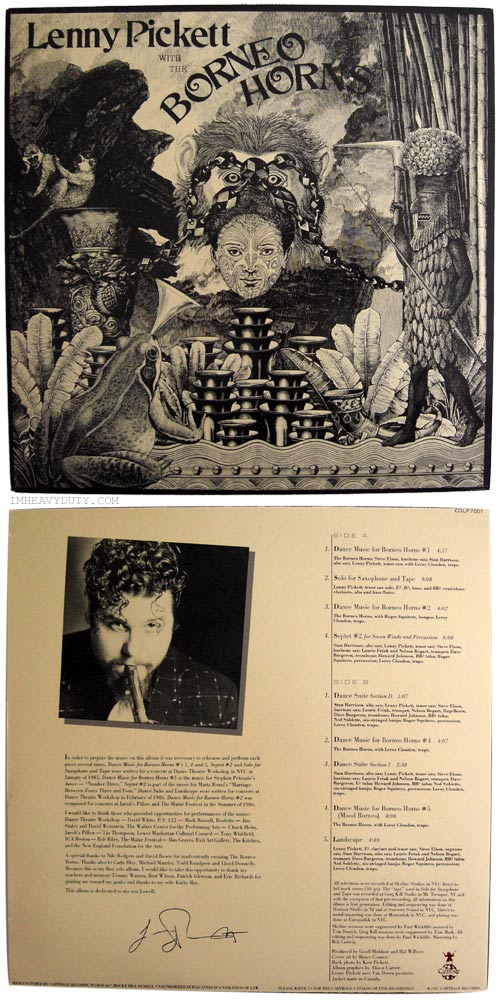
I really want to like this record by Lenny Picket with The Borneo Horns. And I do in fact like some of it, but I know it’s something I’m never going to play much. It’s been 20 years; if it’s never been heavy rotation before, it probably never will be. Lenny Pickett is probably known as Mr. SNL. He’s been in the SNL band since the mid-1980s and leading it since 1995. The first side of this album is pretty enjoyable, but I have to say that I find the second side a bit too “artistic.” Guess I’m just low brow.
There’s more about Lenny Pickett at Wikipedia. I didn’t know he was in Tower of Power. My dad had a record by them…
Want to know what it's like to have brain surgery? Well here's the long version of my experience. Complete with pictures and videos! Read all about the Brain Surgery Experience.